Decoding the Fertilizer Aisle
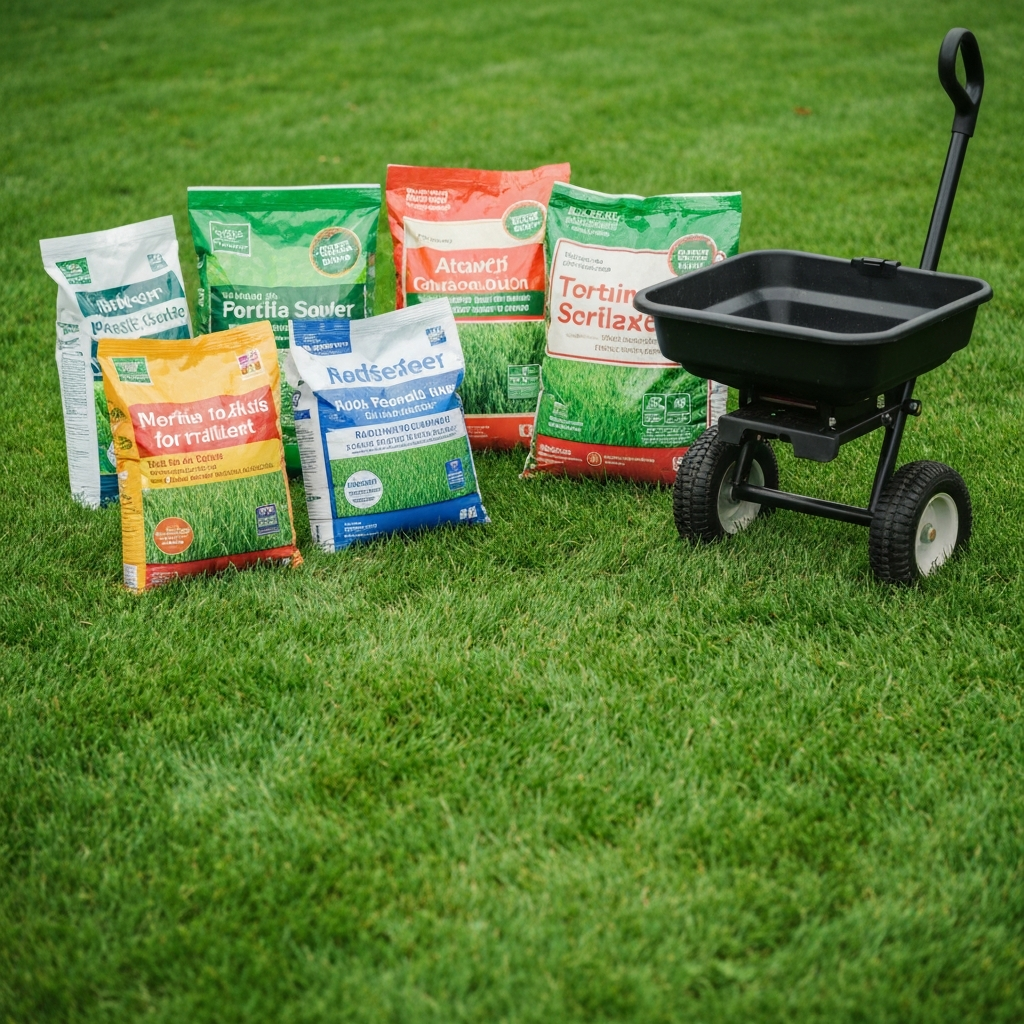
Feeding your lawn is essential for thick, green growth and weed prevention. But when you walk into a home improvement store, you are greeted by a wall of bags with confusing numbers and competing claims. Understanding what your lawn actually needs is the first step to choosing the best fertilizer.
Understanding the N-P-K Ratio
Every bag of fertilizer has three numbers on the front (e.g., 20-5-10). This is the N-P-K ratio, which stands for Nitrogen (N), Phosphorus (P), and Potassium (K).
- Nitrogen (N): Promotes rapid, green, leafy growth. This is the most important nutrient for a green lawn.
- Phosphorus (P): Stimulates root growth and seed germination. (Many states have banned phosphorus in standard lawn fertilizers due to water pollution, unless you are planting new seed).
- Potassium (K): Strengthens the grass, making it more resistant to disease, drought, and cold.
Synthetic Fertilizers: Fast and Effective
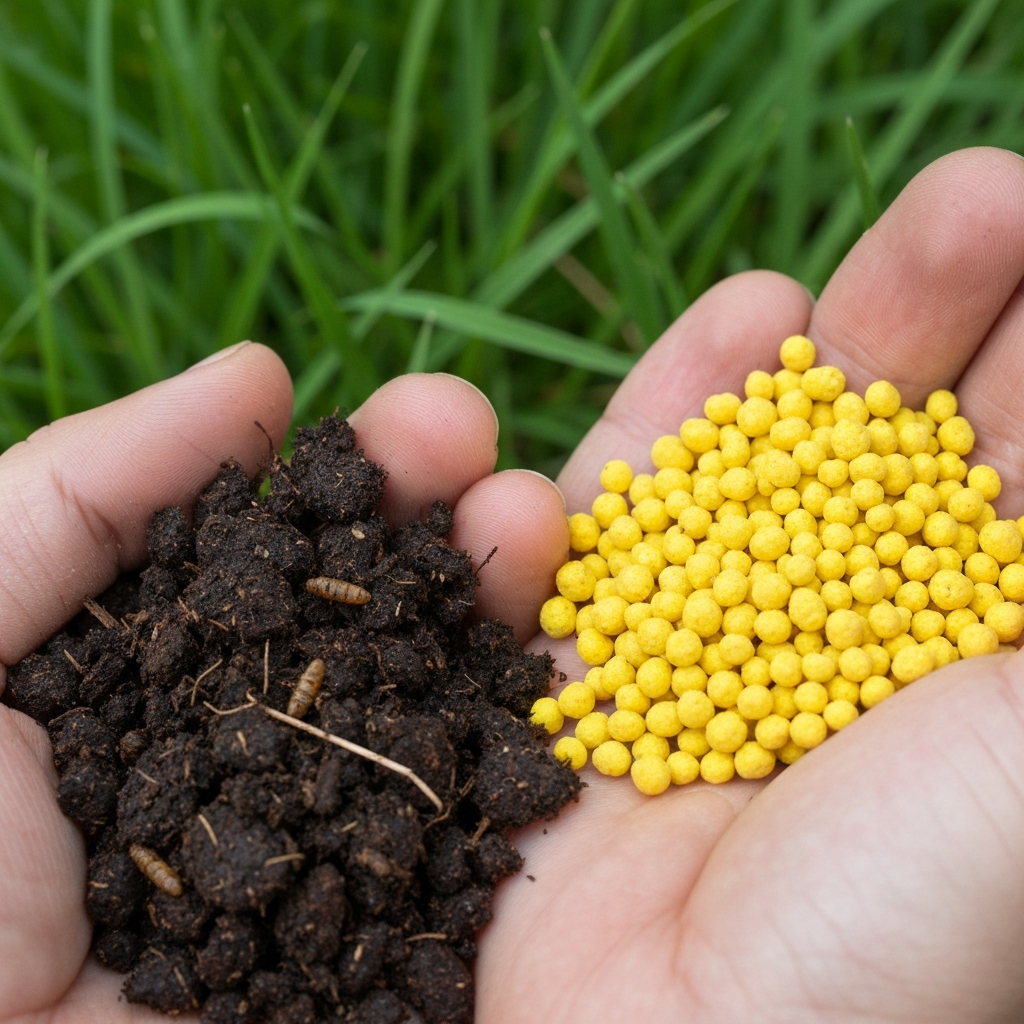
Synthetic fertilizers are manufactured chemically. They are designed to deliver an exact, highly concentrated dose of nutrients immediately to the grass.
Pros:
- Fast Results: You will often see a greener lawn within a few days.
- Cost-Effective: Generally cheaper per pound of nitrogen than organic options.
- Easy to Apply: Uniform granules make spreading simple and accurate.
Cons:
- Burn Risk: Applying too much can easily burn and kill your grass.
- Short-Lived: The nutrients are used up quickly, requiring more frequent applications.
- Environmental Impact: Excess synthetic fertilizer can leach into waterways, causing algae blooms.
Organic Fertilizers: Slow and Sustainable
Organic fertilizers are derived from plant, animal, or mineral sources (like bone meal, kelp, or composted manure). They must be broken down by soil microbes before the grass can absorb the nutrients.
Pros:
- Improves Soil Health: Feeds the beneficial microbes in the soil, improving long-term soil structure.
- No Burn Risk: Because they release nutrients slowly, it is almost impossible to burn your lawn.
- Eco-Friendly: Safe for kids, pets, and the local water supply.
Cons:
- Slow Results: It can take weeks to see a noticeable change in the grass.
- More Expensive: You often need to apply more product to get the same amount of nitrogen.
Which Should You Choose?
If you have severely depleted soil and need immediate green-up, a slow-release synthetic fertilizer is a great starting point. However, if your goal is long-term sustainability and a lawn that requires less watering, transitioning to organic fertilizers is the better choice.
Not sure what your soil needs? Professional lawn care services in Atlanta, GA or landscaping experts in Philadelphia, PA can perform soil tests and create a custom fertilization plan for your yard.