
The War on Weeds
Nothing ruins the look of a manicured lawn faster than an invasion of weeds. Whether it's the bright yellow heads of dandelions or the sprawling, ugly patches of crabgrass, weeds compete with your grass for water, sunlight, and nutrients.
Winning the war on weeds requires a two-pronged approach: eliminating the ones you have and preventing new ones from germinating.
Step 1: Prevention (Pre-Emergent Herbicides)
The easiest way to deal with weeds is to stop them before they even start. Pre-emergent herbicides create a chemical barrier in the soil that prevents weed seeds from sprouting.
Timing is critical: You must apply pre-emergent in the early spring before soil temperatures reach 55°F. If you wait until you see the weeds, it's too late. Homeowners looking for lawn care in Columbus, OH or landscaping in Philadelphia, PA typically apply pre-emergent just as the forsythia bushes begin to bloom.
Step 2: Elimination (Post-Emergent Herbicides and Pulling)
If weeds have already breached your defenses, you have two options: manual removal or chemical treatment.
Manual Pulling
For small infestations, pulling weeds by hand is the most environmentally friendly method. The key is to ensure you extract the entire root system. For weeds with deep taproots, like dandelions, use a specialized weeding tool. Pulling weeds after a heavy rain makes the job much easier.
Post-Emergent Herbicides
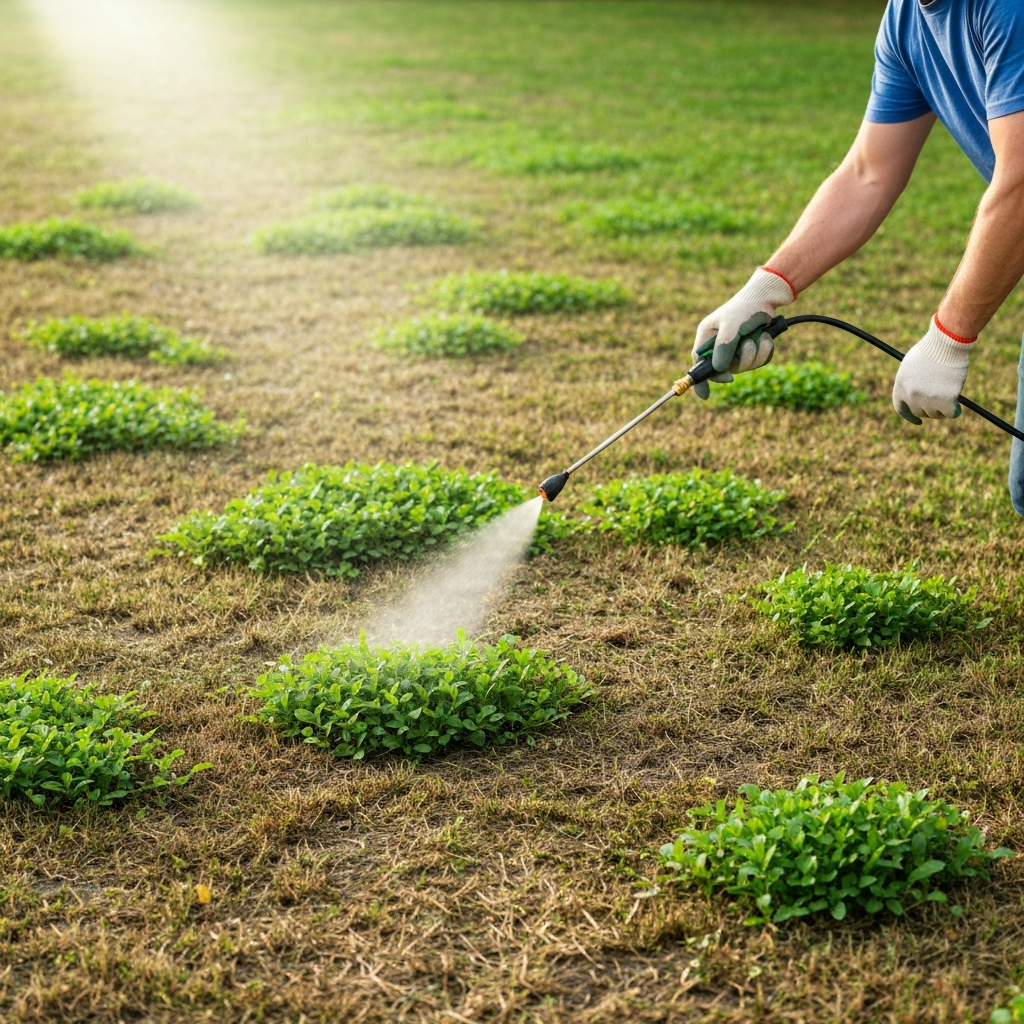
For larger invasions, post-emergent sprays are necessary. When selecting a product, ensure it is a selective herbicide—meaning it will kill the weeds but not your grass. (Non-selective herbicides, like glyphosate, will kill everything they touch).
- Broadleaf Weeds: Dandelions, clover, and creeping Charlie are best treated with a liquid broadleaf herbicide applied directly to the leaves.
- Grassy Weeds: Crabgrass and nutsedge require specific, targeted chemicals.
Step 3: The Ultimate Defense (A Thick Lawn)
The absolute best weed control is a thick, healthy lawn. Weeds are opportunistic; they look for bare patches and thin areas where sunlight hits the soil. If your grass is dense, weed seeds simply cannot germinate.
To promote a thick lawn:
- Mow high (leave grass 3-4 inches tall) to shade the soil.
- Water deeply and infrequently.
- Overseed bare patches in the fall.
If your yard is completely overrun, it might be time to call in the cavalry. Professional lawn care services in Atlanta, GA or yard maintenance in Sacramento, CA have access to commercial-grade treatments that can eradicate severe infestations safely.